The SmallRig CT-10 review centers on a versatile aluminum tripod for photographers who want height, flexible positioning, and a monopod option in one setup.
Its 16-inch folded size and 360-degree ball head make it worth considering for travel and general camera work, while its stated load limits deserve a closer look before pairing it with heavier gear.
SmallRig CT-10 Review Summary
The quick verdict
1,000+ ratings
Read Amazon ReviewsSmallRig CT-10
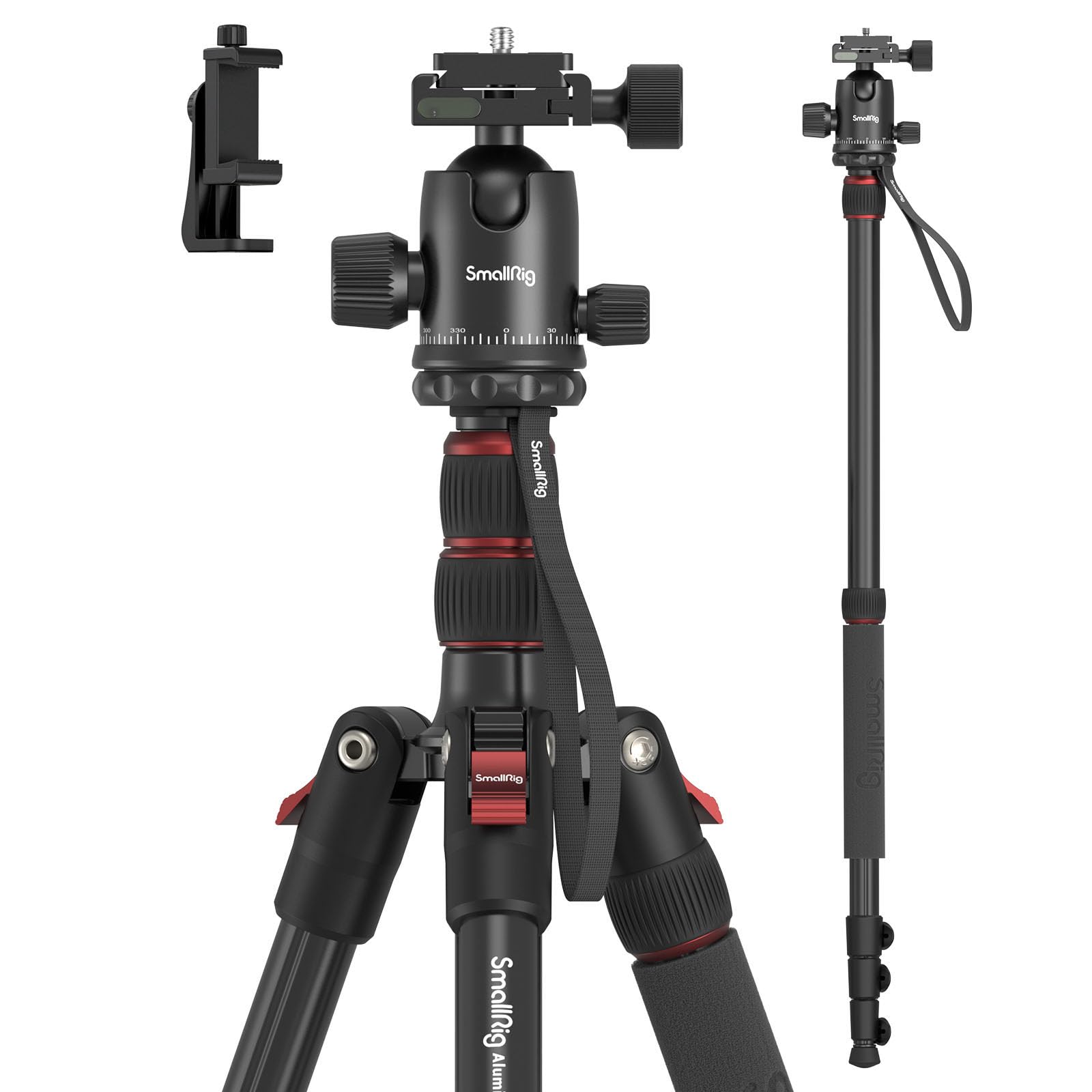
The SmallRig CT-10 suits photographers who want a tall, travel-friendly tripod that can also convert to a monopod and support varied shooting angles.
- Four-section legs use three quick-release flip locks to adjust the working height from 16 to 71 inches.
- The tripod folds to 16.9 inches and weighs 1.53 kg, balancing packability with a substantial support structure.
- A 36 mm metal ball head rotates 360 degrees for horizontal and vertical positioning.
- The center pole can be inverted for low-angle shooting and macro photography.

Pros
- Combines tripod and monopod configurations in one support system.
- Offers a broad height range and a compact folded length for a full-height tripod.
Consider before buying
- At 1.53 kg, it may feel heavy for users prioritizing a very light walking kit.
- The lower stated load limit when tilted calls for attention when using heavier or off-center camera setups.
Read the full review summary
The CT-10 combines a four-section, quick-lock leg design with a ball head, reversible center pole, and a leg that converts into a monopod.
That mix gives it more positioning options than a basic fixed-height support, and its 71-inch maximum working height can be useful for standing-height compositions, overhead framing, or keeping a camera above a crowd when the location allows.
It is aimed at photographers and creators who want one support for varied setups, including DSLR and mirrorless cameras, action cameras, phones, and projectors with compatible mounting points.
The 1.53 kg weight and 16.9-inch folded length make it more portable than a full-size video tripod, though the need for a separate telephoto lens support on certain camera setups is a practical consideration.
The buying factors
SmallRig CT-10 Scorecard
Editorial scores reflect listed features and buyer fit; they are not laboratory measurements or customer ratings.
Positioning flexibility
The ball head rotates 360 degrees, the center pole can be inverted, and the tripod can convert to a monopod.
Height range
The working height adjusts from 16 to 71 inches, covering compact and standing-height setups.
Travel readiness
Its 16.9-inch folded size is practical to pack, although the 1.53 kg weight is still noticeable on longer walks.
Device compatibility
The 1/4-inch and 3/8-inch threaded connections support a broad mix of camera and device types.
Accessory mounting
Three additional 1/4-inch threaded holes on the bracket offer places to attach compatible accessories.
Heavy lens suitability
The listed vertical and tilt load limits differ, and telephoto zoom setups may need a separate lens support for better balance.
Key Features and Specifications of SmallRig CT-10
- Four-section legs use three quick-release flip locks to adjust the working height from 16 to 71 inches.
- The tripod folds to 16.9 inches and weighs 1.53 kg, balancing packability with a substantial support structure.
- A 36 mm metal ball head rotates 360 degrees for horizontal and vertical positioning.
- The center pole can be inverted for low-angle shooting and macro photography.
- One tripod leg can be converted into a monopod for hiking or travel use.
- The mounting system accommodates 1/4-inch-20 and 3/8-inch-16 threaded devices, and the bracket includes three additional 1/4-inch threaded holes.
- The stated load capacity is up to 33 pounds vertically or 11 pounds when tilted; telephoto zoom users may need an additional tripod mount ring or lens mount for better balance.
Pros and Cons of SmallRig CT-10
Pros
- Combines tripod and monopod configurations in one support system.
- Offers a broad height range and a compact folded length for a full-height tripod.
- Ball-head rotation and an invertible center pole expand framing options.
- Threaded mounting points accommodate a range of compatible cameras and accessories.
Consider before buying
- At 1.53 kg, it may feel heavy for users prioritizing a very light walking kit.
- The lower stated load limit when tilted calls for attention when using heavier or off-center camera setups.
- A telephoto zoom lens may need a separate mount ring or lens support to achieve better balance.
Who Should Buy SmallRig CT-10?
Good fit
Consider the CT-10 if you want one support that can handle standard tripod work and occasional monopod use.
Its 16-to-71-inch adjustment range and reversible center pole make it adaptable to low-angle compositions as well as eye-level shooting, while the ball head allows quick shifts between horizontal and vertical framing.
It also fits creators who use more than one kind of device.
The 1/4-inch-20 and 3/8-inch-16 connections cover a useful range of mounting needs, and the extra threaded holes on the bracket provide options for compatible accessories such as a monitor or phone mount.
Check that your chosen accessories match the available thread sizes and leave room for the camera controls you need.
Before buying, compare your complete camera setup with both load figures: up to 33 pounds vertically and up to 11 pounds tilted.
If you use a telephoto zoom lens, check whether your lens or camera setup needs the additional tripod mount ring or lens support mentioned for better balance.
Who should skip it
Look elsewhere if your priority is a very lightweight travel support: at 1.53 kg, this aluminum model has a noticeable carry weight even when folded.
It may not be the best fit for demanding video moves that need a dedicated fluid head.
If your camera will be tilted or balanced with a telephoto zoom, first check the complete rig against the lower tilted load limit and determine whether separate lens support is appropriate.
SmallRig CT-10 review: how its design fits real shooting routines
A useful range of heights for still photography
The 16-to-71-inch working range gives the CT-10 scope for low compositions and standing-height framing without requiring a separate support.
Four leg sections and three flip locks per leg make the height adjustable; as with any multi-section design, buyers who frequently reposition should consider how many locks they will need to operate at each setup.
The monopod conversion trades simplicity for versatility
Being able to turn the tripod into a monopod can reduce the need to carry a second support for situations where three legs are awkward.
It is a practical flexibility point for travel and hiking, although a monopod serves a different role from a tripod, so the conversion is most useful when your shooting routine benefits from both types of support.
Ball-head movement and low-angle options
The 36 mm metal ball head offers 360-degree rotation and supports horizontal or vertical positioning.
Inverting the center pole adds a route to low-angle and macro compositions; before using that setup, check that your camera and lens have enough clearance from the ground and that the framing remains comfortable to control.
Read the load figures in context
The stated vertical capacity is higher than the tilt capacity, so the direction of force matters when assessing a camera rig.
Consider the camera, lens, and attached accessories together, especially if the setup is off-center or uses a telephoto zoom. For those lenses, the product guidance calls for an additional tripod mount ring or lens support to improve balance.
Alternatives to SmallRig CT-10
Complete Tripod Units alternative
700+ ratings
Read Amazon ReviewsSmallRig AD-01 Fluid Head Video Tripod
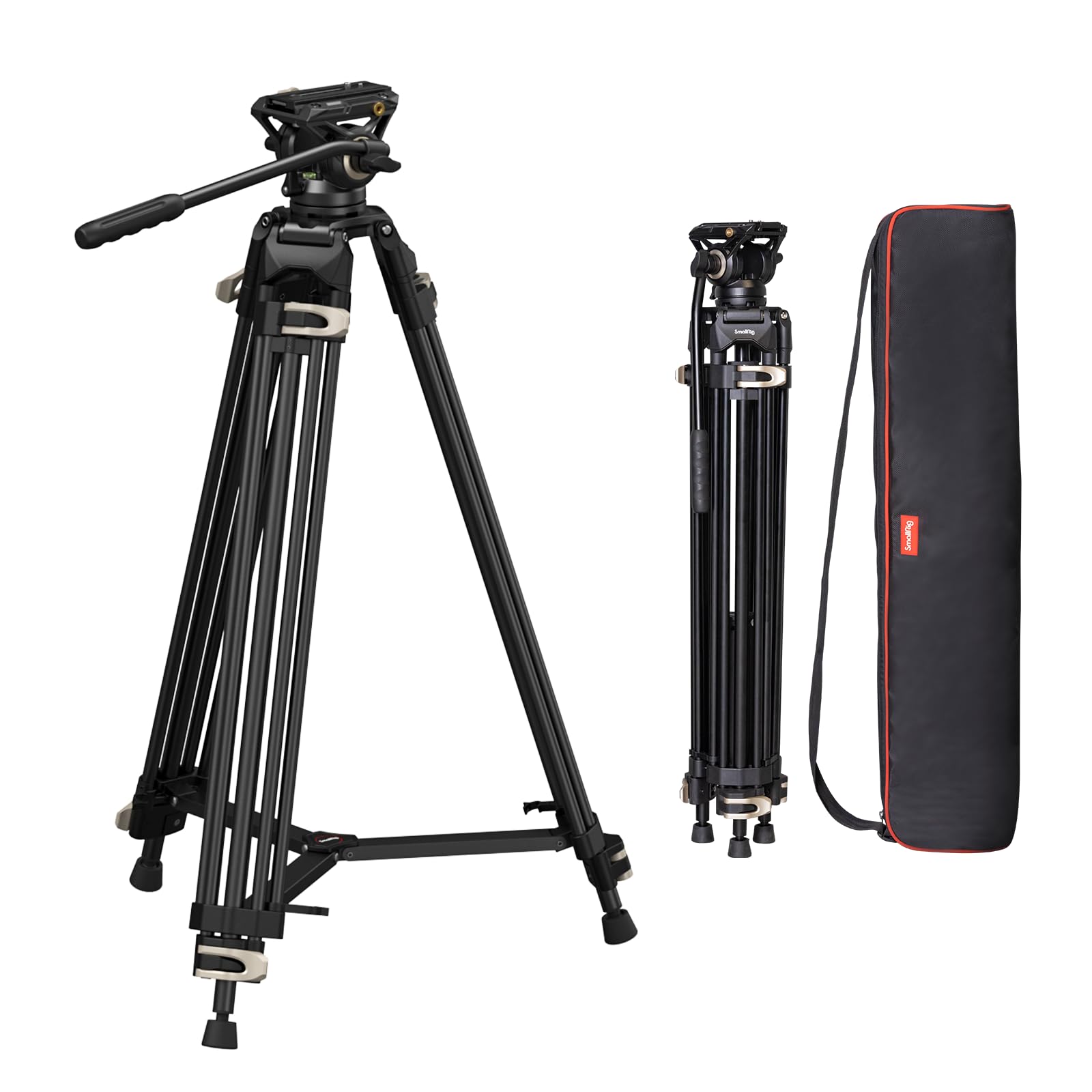
Choose the CT-10 for its monopod conversion, compact folded length, and general still-photo flexibility. The AD-01 is the more relevant fit if controlled pan-and-tilt video movement and a fluid head matter more than compact travel packing.
- The AD-01 is a heavier-duty aluminum video tripod with a fluid head, 33-to-73-inch height range, 17-pound maximum load, and dual-mode quick-release plate mounting.
- The CT-10 is an aluminum ball-head tripod that converts to a monopod, folds to 16.9 inches, and adjusts from 16 to 71 inches.
Complete Tripod Units alternative
300+ ratings
Read Amazon ReviewsSmallRig x Potato Jet Tribex Carbon II Tripod
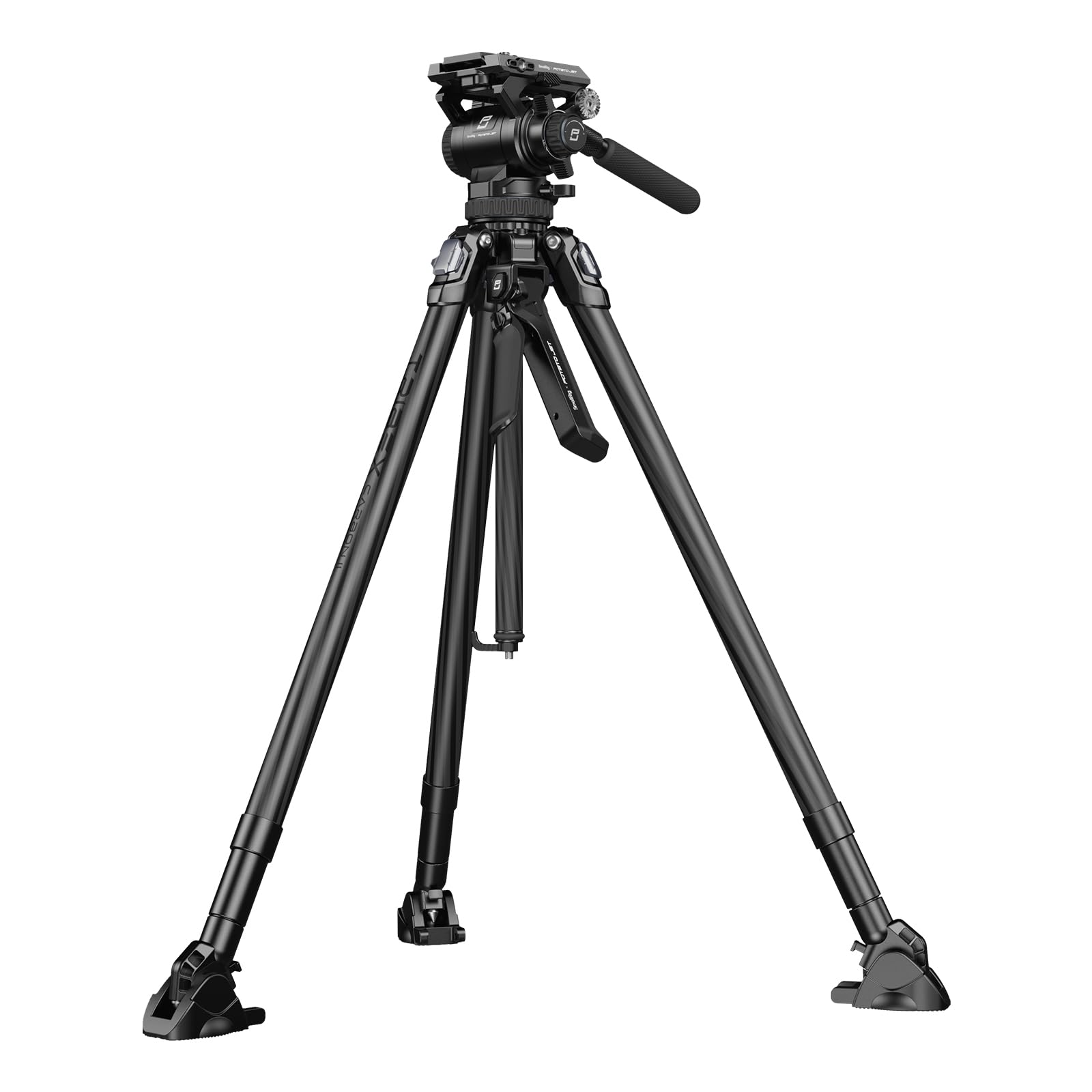
The CT-10 is the simpler choice for a lighter, more compact general-purpose setup with a monopod option.
The Tribex Carbon II is aimed at video users who value adjustable fluid-head damping and counterbalance, and who can accommodate its heavier build.
- The Tribex Carbon II uses carbon-fiber legs and a fluid head with adjustable damping and four-step counterbalance.
- It weighs 3.8 kg, adjusts from 10.6 to 66.1 inches, and supports up to 13.2 pounds.
- The CT-10 offers a ball head, monopod conversion, and a 16-to-71-inch range in a 1.53 kg aluminum design.
Is SmallRig CT-10 Worth It?
The SmallRig CT-10 is worth considering if you want a flexible aluminum tripod with a substantial height range, low-angle positioning, and a monopod conversion in one package.
Its compact folded length and multiple threaded mounting points add useful versatility for travel and mixed-device setups.
Buy it with your actual camera rig in mind: the 1.53 kg carry weight is not ultralight, and the stated capacity drops from 33 pounds vertically to 11 pounds when tilted.
Telephoto zoom users should also check whether their lens needs a separate support for balance. If those tradeoffs suit your setup, the CT-10 is a capable all-purpose support to shortlist.
Your review at a glance
1,000+ ratings
Read Amazon ReviewsSmallRig CT-10
The SmallRig CT-10 suits photographers who want a tall, travel-friendly tripod that can also convert to a monopod and support varied shooting angles.
- Four-section legs use three quick-release flip locks to adjust the working height from 16 to 71 inches.
- The tripod folds to 16.9 inches and weighs 1.53 kg, balancing packability with a substantial support structure.
- A 36 mm metal ball head rotates 360 degrees for horizontal and vertical positioning.
- The center pole can be inverted for low-angle shooting and macro photography.